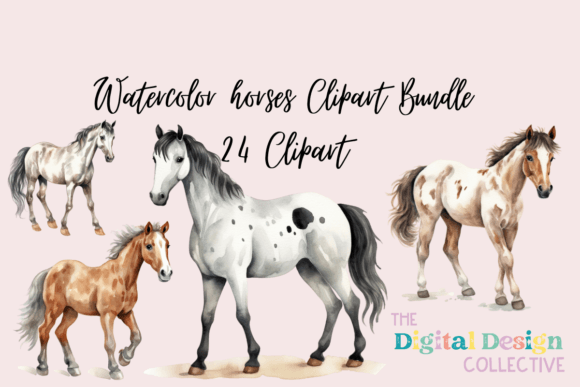
Watercolor Horses Clipart Bundle: A Digital Asset for Authentic Design
The Organic Aesthetic of Digital Design Assets
In the current landscape of digital design, there is a distinct movement away from hyper-polished, sterile vector graphics toward imagery that retains the organic warmth of the human hand. The Watercolor Horses Clipart Bundle sits squarely within this trend, offering a collection that prioritizes texture and emotion over geometric perfection. This isn't just a set of pictures; it is a curated library of design assets that serve a specific creative function: bringing the fluidity of traditional paint into the controlled environment of digital layout. For brand identity specialists and independent publishers, understanding how to leverage these assets is key to creating visuals that resonate with an audience looking for authenticity.
The core appeal of this collection lies in its visual personality. Unlike standard stock photography or rigid vector art, watercolor effects provide an inherent "wabi-sabi" quality—a Japanese concept centered on accepting transience and imperfection. The brushstrokes are visible, the blending is soft, and the edges are rarely perfectly crisp. This style acts as a creative font for imagery; just as a handwritten font conveys intimacy and personality, a watercolor illustration conveys artistry and care. When you incorporate these elements into a project, you are signaling to your audience that the content has been crafted with a personal touch, rather than generated algorithmically.
Strategic Applications Across Industries
While the immediate use-case for a Watercolor Horses Clipart Bundle might seem limited to niche equine interests, its utility spans a surprising array of sectors. In packaging design, for example, these assets can soften the industrial feel of product boxes, particularly for artisanal goods, organic products, or luxury wellness brands. A tea company or a boutique soap maker could utilize these illustrations to evoke natural ingredients and a gentle, calming user experience. The versatility of the PNG format allows these elements to be layered over textures or solid colors without clashing, acting as a visual anchor that guides the consumer's eye.
For social media graphics and web design, the bundle offers a solution to the "scroll-stopping" challenge. Algorithms favor engagement, and unique, high-quality visuals are the primary driver of that engagement. Using these clipart elements allows content creators and marketers to break the monotony of standard stock photos. A blogger discussing lifestyle, travel, or even personal development can use the horse imagery as a metaphor for freedom, strength, or journey. This is where modern typography meets illustration; pairing these watercolor horses with a clean sans serif font creates a dynamic contrast between the rigid structure of text and the fluid nature of the art, resulting in a more sophisticated visual hierarchy.
Enhancing Print and Editorial Layouts
In the realm of editorial design, specifically for magazines, planners, and greeting cards, the Watercolor Horses Clipart Bundle provides essential decorative elements. For greeting card designers, the challenge is often creating a product that feels personal enough to gift. A watercolor horse adds an emotional weight that a flat graphic cannot match. It suggests a story or a mood—playful, majestic, or serene—depending on the specific pose and color palette of the image. This emotional resonance is crucial for small business owners selling on platforms like Etsy, where the perceived value of a product is often tied to its aesthetic uniqueness.
Furthermore, these assets are invaluable for those creating educational materials or children's books. The soft edges and artistic style are less intimidating and more engaging for younger audiences than realistic photography. However, it is vital to maintain readability when overlaying text. The best practice is to treat the clipart as a supporting element rather than the background. By placing the illustration in the margins or using it as a header element, you preserve the integrity of the text block, ensuring that the display font or body copy remains legible. This balance ensures the design remains professional and functional, regardless of the medium.
Integrating Clipart with Typography and Brand Strategy
A common pitfall for designers is treating illustration and typography as separate entities. To truly leverage a premium font or a high-quality clipart bundle, they must work in concert. The style of the watercolor horses dictates the typographic choices surrounding them. Because watercolor is inherently soft, organic, and slightly irregular, it pairs exceptionally well with serif fonts that have a classic feel or script fonts that mimic the flow of a pen. Conversely, pairing these illustrations with a heavy, industrial sans serif font can create a striking "high-low" contrast that feels very contemporary and edgy.
When building a brand identity, consistency is paramount. If you choose to use the Watercolor Horses Clipart Bundle for a marketing campaign, that aesthetic choice must ripple through the entire design system. This means selecting a typeface that shares a similar "temperature." A cold, geometric sans serif might fight with the warmth of the watercolor, creating cognitive dissonance for the viewer. Instead, look for fonts with slightly rounded terminals or humanist touches. This cohesion influences brand perception; it tells the audience that the brand is thoughtful, detail-oriented, and values the harmony of its visual communication.
Practical Workflow and Technical Considerations
From a practical workflow perspective, working with PNG files requires a basic understanding of layering. Since these are raster images, they do not scale infinitely like vectors. Therefore, it is essential to consider the end-use application. For digital design assets, such as website banners or Instagram stories, the resolution is usually sufficient. However, for large-format print design—such as posters or signage—care must be taken not to enlarge the image beyond its native resolution, which would result in pixelation and a loss of that crucial professional finish.
Another technical aspect to consider is the white space or "knockout" around the elements. Even though the images are PNGs, the composition of the watercolor might have soft, fading edges. When placing these on colored backgrounds, designers should test for "haloing," where a faint white outline appears. Adjusting the levels or using blending modes like "Multiply" can often solve this, allowing the texture of the background to show through the white areas of the watercolor. This level of refinement separates amateur work from professional output.
Selecting the Right Design Assets for Your Project
Ultimately, the decision to incorporate the Watercolor Horses Clipart Bundle into your library comes down to project fit and commercial licensing. For entrepreneurs and marketers, the ability to use these assets for commercial purposes—on products for sale or marketing materials—is a significant value add. It removes the legal ambiguity often associated with sourcing images from the internet. Knowing that you have the rights to use these illustrations allows you to build products and campaigns with confidence.
Before committing, evaluate the specific style of the horses. Does the color palette align with your current brand identity? Does the artistic style complement your chosen creative font? A mismatch here can dilute your message. If your brand is ultra-modern and minimal, a highly textured, messy watercolor might feel out of place. However, if your brand values craftsmanship, nature, or storytelling, these assets can significantly elevate your visual storytelling. By treating these clipart elements as integral parts of your design assets rather than afterthoughts, you ensure that your final product—whether a greeting card, a social media post, or a website—feels cohesive, intentional, and engaging.